







How Do Tariffs Work and Who Pays Them? (2026)
Tariffs in Plain English
If you have heard politicians argue about tariffs lately, you have probably heard two very different stories. One side says foreign countries pay the bill. The other says American shoppers do. The truth is more specific than either slogan, and it matters for your wallet. This guide explains how do tariffs work and who pays them, in plain language, with real numbers, so you can judge the next headline for yourself.
Short answer first: the US company that imports a product pays the tariff to US Customs and Border Protection at the border. Foreign governments do not write that check. But the cost rarely stops with the importer. It usually travels down the supply chain and shows up in the prices American businesses and families pay.
What a Tariff Actually Is
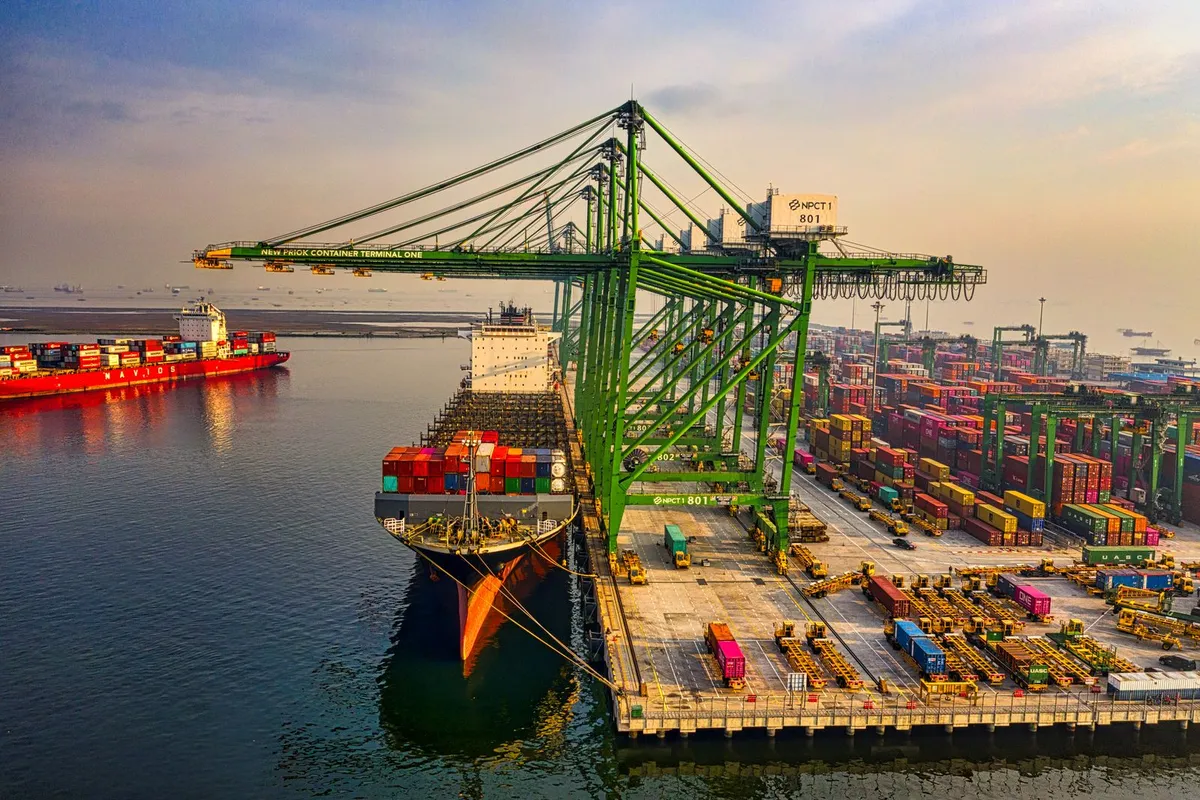
A tariff is a tax charged on goods when they cross a border into a country. In the United States, it applies to imports, the products brought in from abroad. It is collected by US Customs and Border Protection (CBP), the federal agency that manages more than 300 ports of entry, from container terminals in Los Angeles and New York to land crossings on the Canadian and Mexican borders.
Think of it this way. When a shipment arrives, customs officers do three things: identify what the product is, work out where it came from, and apply the duty rate that the Harmonized Tariff Schedule sets for that product. Only then is the shipment released into US commerce. The tariff is not a fine, and it is not a fee paid by the country that made the goods. It is a tax on bringing goods into the American market.
Tariffs are old. The United States has used them since its founding, first mainly to raise government revenue, later mainly to protect domestic industries and to gain leverage in trade disputes. In 2025 the average effective tariff rate on US imports reached about 7.7 percent, the highest since 1947, and the federal government collected roughly $264 billion to $287 billion in customs revenue, nearly all of it from US-based importers.
How a Tariff Gets Collected, Step by Step
Here is the journey of a single shipment, because the mechanics explain who pays better than any slogan can.
- An American business orders goods abroad. Say a US retailer orders televisions from a factory in China for $100 per unit.
- The shipment arrives at a US port. The importer of record, usually the US buyer or its licensed customs broker, files entry paperwork with CBP. That paperwork declares the value, the product classification, and the duty rate.
- CBP assesses the duty. If the tariff rate on those televisions is 25 percent, the importer owes $25 per unit. Under federal law (19 U.S.C. 1505), the importer must deposit estimated duties when the goods enter or within 12 working days of release.
- The importer pays the US Treasury. The money goes to CBP, not to the factory in China and not to the Chinese government. If the importer fails to pay, CBP can seize the merchandise and assess penalties, all against the domestic firm.
- The goods move on. The importer adds the $25 duty to its landed cost, the total cost of getting the product to its warehouse, alongside freight, insurance, and handling. From there, the cost moves downstream to distributors, retailers, and shoppers.
Notice what never happens in that chain: no foreign company receives a bill from the US government. There is simply no mechanism for Washington to collect tariff revenue from a foreign party.
Who Legally Pays, and Who Really Ends Up Paying
Legally, the answer is simple: the importer of record pays. That is the US owner or purchaser of the goods, or the customs broker they designate. The foreign exporter just ships the product. Whether that exporter later lowers its own prices to stay competitive is a separate business decision, and it should not be confused with the payment obligation.
Economically, the answer is messier, and economists call it tariff incidence: who ends up poorer once prices and margins adjust. The cost can land in four places, and in practice it usually lands in several at once:
- The importer absorbs part of the duty by accepting thinner profit margins.
- The foreign supplier absorbs a slice by cutting its export price to keep the American buyer.
- Other businesses in the chain, distributors and retailers, absorb a slice through their own margins.
- The consumer pays the rest through a higher shelf price.
Recent evidence leans heavily toward the last group. A Kiel Institute study of more than 25 million US shipment records from the 2018 to 2026 tariff rounds found that American importers and consumers bore about 96 percent of the cost, with foreign exporters absorbing only about 4 percent. Other studies put the US share at 94 to 100 percent. In plain terms, tariffs in recent years have functioned mostly as a tax on domestic buyers, not as a payment extracted from abroad.
The Three Types of Tariffs, With Real Math
Not every tariff works the same way. The type decides how the bill is calculated.
Ad valorem tariffs are a percentage of the product’s value, and they are the most common kind. A 10 percent ad valorem tariff on a $100 product adds $10 in duty. A 25 percent tariff on a $100,000 shipment of electronics means a $25,000 bill at the port.
Specific tariffs are a flat dollar amount per unit, regardless of price, for example $2 per kilogram or $5 per item. These hit cheap goods hardest in percentage terms, because the flat charge is a bigger share of a low price.
Compound tariffs combine the two: a percentage of value plus a fixed amount per unit. Some schedules also use seasonal or quota-linked rates, where the duty changes with the time of year or once imports pass a set volume.
Why Governments Impose Tariffs at All
Governments reach for tariffs for three main reasons, and a single tariff often serves more than one.
To raise revenue. This was the original American use. Before income tax, tariffs funded much of the federal government. Today they are a small share of federal collections compared with income and payroll taxes, but 2025 showed they can still raise hundreds of billions.
To protect domestic industries. A tariff raises the price of imported goods, giving local producers what economists call a price umbrella. If an imported bottle of olive oil costs $15 after the tariff while a similar American oil costs $10, shoppers have a reason to buy local. The trade-off is that shoppers who still want the import pay more.
To gain negotiating leverage. Tariffs can pressure a trading partner to change its policies, open its markets, or come to the table. Trading partners often answer with retaliatory duties of their own, which is why tariff disputes can escalate: in recent rounds, China, Canada, Brazil, and India all imposed retaliatory duties on American exports.
How the Cost Reaches Your Shopping Cart
The path from the port to the price tag is not instant, and it is not one to one. Three effects decide what you actually pay.
First, pass-through. Research on the 2018 and 2025 rounds found tariff costs were almost fully reflected in US import prices, meaning foreign exporters generally did not lower their prices enough to absorb the hit. The importer’s cost of goods rises by nearly the full tariff amount.
Second, markup amplification. Each business in the chain applies its normal percentage markup to a higher base cost. A 25 percent tariff on a $100 item adds $25 at the border, but if the retailer marks up by 50 percent, the tariff adds $37.50 to the final price. That is why shoppers sometimes pay more than 100 percent of the tariff itself.
Third, timing. Retailers sell existing inventory first, stock bought before the tariff took effect at the old rate. Depending on how fast a store turns over stock, shelf prices can take two to four quarters to fully reflect a new tariff. So a tariff announced today may not show up in your grocery bill until months later, and it can keep biting long after the headlines move on.
There is a hidden fourth effect too. When imports get pricier, domestic competitors face less price pressure and often raise their own prices to capture bigger margins. Studies found domestic substitute goods rising about 3.6 percent while imports rose 6.2 percent in one recent round. Tariffs lift the general price level, not just the price of imports.
Who Gets Hurt Most, and Who Benefits
The burden is not shared evenly. Lower-income households feel it most, because a larger share of their spending goes to imported consumer goods like clothing, electronics, and household items. Small businesses feel it sharply too: unlike a large retailer, a small importer cannot easily switch suppliers, absorb a 25 percent cost increase, or negotiate lower prices abroad.
On the other side, domestic producers in protected industries benefit from the price umbrella, at least in the short term, and the Treasury collects the revenue. Whether those gains outweigh the higher prices paid by everyone else is genuinely debated. What is not in serious dispute is the basic plumbing: Americans, not foreigners, fund the check.
What Tariffs Are Not
A few border charges look like tariffs but are not. Importers also pay a Merchandise Processing Fee (0.3464 percent of value, capped at $651.50 per entry for fiscal year 2026) and, on ocean freight, a Harbor Maintenance Fee of 0.125 percent. Sales tax, brokerage, inspection, storage, and transport charges are separate again, and an export duty is a different instrument from the import tariffs the US uses.
A Quick Tariff-Spotting Checklist for Shoppers
Next time a product you buy jumps in price, run this quick check before blaming (or crediting) tariffs:
- Is the product imported, or made in the US from imported parts? Both can carry tariff costs.
- Was a new tariff announced 2 to 4 quarters ago? Shelf prices lag behind border charges.
- Did the domestic alternative rise too? That is the price umbrella effect, and it is a tariff footprint.
- Is the increase close to the tariff rate, or larger? Larger suggests markup amplification along the chain.
- Check the source: a CBP or Federal Register notice confirms a real duty change, while a retailer’s claim may be covering other cost increases.
Frequently Asked Questions
Do foreign countries pay US tariffs?
No. The US importer of record pays CBP. Foreign governments and manufacturers owe the US Treasury nothing under tariff law, even though exporters sometimes lower their prices to stay competitive.
Do tariffs always raise consumer prices?
Almost always, to some degree. Businesses absorb part of the cost in margins, and timing delays the effect, but research finds most of the cost reaches domestic prices, and markup effects can push the final increase above the tariff rate itself.
Why do prices rise even on American-made products?
Two reasons: American products often use imported parts that carry tariffs, and domestic producers can raise prices when tariff-hit imports stop undercutting them. Both effects lift the general price level.
Can a business avoid a tariff legally?
Sometimes, by sourcing from a different country, redesigning a product to change its customs classification, or shifting production. Each option has real costs and limits, and misclassifying goods to dodge duties risks seizure and penalties.
Conclusion
Tariffs are a tax on imports, collected at the American border from American importers, and mostly borne, in the end, by American businesses and shoppers. That single fact clears up most of the argument. Foreign countries do not pay the bill, importers do not always eat the cost, and consumers do not always pay all of it, but the evidence from recent years is clear about where most of it lands: at home. Keep the checklist above handy, and the next tariff headline will read less like a slogan and more like a price tag you can actually decode. For more on how price pressures ripple through the US economy, read our guides on what inflation is and why it matters, what causes inflation, and what the debt ceiling is.