





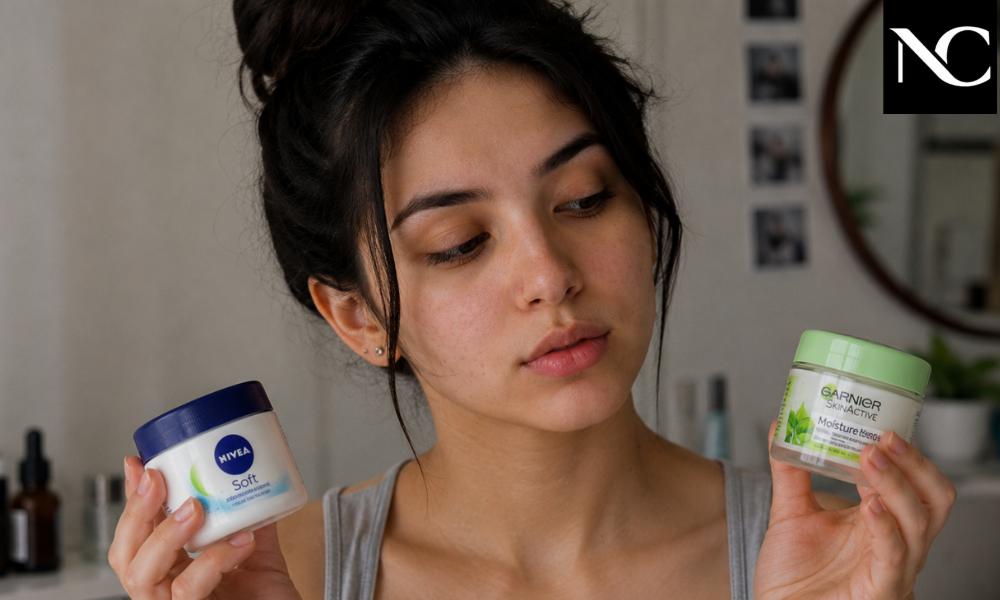
I’m a Skincare Beginner. Is Nivea a Good Starting Brand Compared to Garnier?
I remember standing in the skincare aisle with a basket half full of products I didn’t understand, trying to decide between a Nivea tub and a row of Garnier bottles with words like “niacinamide” printed on them in bold letters. If you’re a skincare beginner asking whether Nivea is a good starting brand compared to Garnier, you’re in the same spot I was in, and the short answer is that both can work, but they solve different problems.
Nivea builds its lineup around hydration and keeping your skin barrier calm and comfortable. Garnier leans into active ingredients meant to target specific concerns like oiliness, dullness, or uneven tone. Neither is objectively “better.” The right one depends on your skin type, how much you want to learn before you start, and what you’re actually trying to fix.
This breakdown walks through both brands product by product, ingredient by ingredient, and skin type by skin type, so you can make a decision that actually fits your face instead of guessing.
Nivea or Garnier for Beginners?
If your skin is dry, sensitive, or you just want a simple, low-maintenance routine, Nivea is generally the easier starting point. Its formulas focus on moisture and comfort, so there’s less risk of irritation while you’re still learning how your skin reacts to things. If your main concern is oil control, acne marks, dullness, or uneven tone, Garnier is usually the stronger pick, since its products are built around active ingredients that target those issues directly. Most complete beginners do well starting with Nivea’s basics and adding a Garnier product later once they know their skin type.
Nivea and Garnier: The Core Difference
Nivea has been making moisturizers for over a century, and it shows in how the brand approaches skincare. The Nivea Creme, the Soft Cream, and most of the face moisturizer line are all built around a similar idea: keep the skin hydrated, keep the barrier intact, and don’t overcomplicate things with a long ingredient list.
Garnier, part of L’Oréal’s portfolio, takes a different approach. Its SkinActive line, the Bright Complete range, and its acne-focused cleansers are formulated around ingredients that do more than moisturize. Vitamin C for brightening, salicylic acid for breakouts, niacinamide for tone, these show up across the Garnier lineup in a way that Nivea’s core range simply doesn’t attempt.
Neither approach is wrong. A dry, tight, sensitive complexion doesn’t need active ingredients right away, and piling them on too early is one of the most common mistakes beginners make. On the other hand, if you already know oil and breakouts are your issue, sticking to a purely hydrating routine won’t get you very far.
Nivea vs Garnier by Skin Type
Dry or Normal Skin
Nivea tends to win here. The Soft Cream and the classic Nivea Creme use glycerin, panthenol, and light oils to lock in moisture without feeling greasy once absorbed. I’ve used the Soft Cream through a few winters, and it’s one of the few drugstore moisturizers that actually holds up against dry, heated indoor air without needing to be reapplied every few hours.
Garnier does make moisturizers suited for dry skin too, but the brand’s strongest formulas tend to sit in the treatment category rather than pure hydration, which means you’re paying for extra ingredients you may not need yet.
Oily or Combination Skin
Garnier usually pulls ahead. Its micellar water and oil-free moisturizers are formulated to feel light and avoid clogging pores, and the SkinActive line specifically markets several products as non-comedogenic. For someone dealing with midday shine or clogged pores, that lightweight texture makes a noticeable difference compared to some of Nivea’s richer creams, which can feel heavy on oilier skin types.
Sensitive Skin
This is where Nivea’s simplicity becomes an advantage. Fewer active ingredients means fewer chances for irritation, and most of the core Nivea range is fragrance-light or formulated with sensitive skin in mind. Garnier can still work for sensitive skin, but you have to be more selective, since some of its brightening and exfoliating products contain acids that can sting or cause redness if introduced too quickly.
Acne-Prone or Teenage Skin
Garnier tends to be the more targeted option. Its cleansers with salicylic acid and its oil-control moisturizers are specifically formulated for breakouts, which makes it a common recommendation for teenagers dealing with their first wave of acne. Nivea doesn’t ignore this skin type, but its acne-specific range is smaller, so beginners with persistent breakouts usually get more mileage out of Garnier.
Ingredient Comparison Table
| Ingredient | Found In | Main Function | Best For |
|---|---|---|---|
| Glycerin | Nivea Creme, Soft Cream | Draws moisture into skin | Dry, dehydrated skin |
| Ceramides | Nivea moisturizers | Rebuilds skin barrier | Sensitive, compromised skin |
| Panthenol | Nivea range | Soothes and calms | Irritated, reactive skin |
| Niacinamide | Garnier Bright Complete, some Nivea lines | Evens tone, reduces redness | Uneven tone, mild acne marks |
| Salicylic Acid | Garnier Pure Active | Unclogs pores | Acne, blackheads |
| Vitamin C | Garnier Bright Complete | Brightens, fades dark spots | Dullness, hyperpigmentation |
| Hyaluronic Acid | Both brands (select products) | Hydrates without heaviness | All skin types |
Price and Value
Both brands sit firmly in the drugstore price range, and neither will drain your budget. A complete three-step routine (cleanser, moisturizer, sunscreen) from either brand typically lands somewhere between 20 and 35 dollars depending on your location and which specific products you choose.
Nivea’s jars and tubes tend to be larger for the price, so you often get a lower cost per use over time, especially with the Soft Cream and Creme, which last for months with daily use. Garnier’s serums and treatment products come in smaller sizes since they’re meant to be used in smaller amounts, which can make the per-bottle price look similar even though you’re getting less product overall.
Neither brand requires a big financial commitment to start, which is part of why they’re both so common as first skincare brands.
Availability by Region
One thing that rarely gets mentioned is that formulations for both brands can vary depending on where you’re shopping. Nivea’s European lineup sometimes includes products not sold in the US, and Garnier’s offerings in South Asia or the Middle East often differ from what’s available in Western markets. If you’re following a routine recommendation from someone in a different country, double check that the exact product is sold where you live, since the name might be the same while the formula underneath isn’t.
Can You Mix Nivea and Garnier?
Yes. There’s no rule that says you have to pick one brand and stick with it. A common approach for beginners is using a Garnier cleanser to target oil or acne, followed by a Nivea moisturizer to keep the skin comfortable, then finishing with sunscreen from either brand. Mixing brands only becomes a problem if you’re layering too many active ingredients at once, which brings us to the next point.
How to Introduce Active Ingredients Without Irritation
If you’re moving toward a Garnier product with salicylic acid or vitamin C, don’t add it to a full routine on day one. A simple way to introduce it safely:
- Patch test the product on your inner arm or jawline for 24 hours before using it on your full face.
- Start with application every other day instead of daily.
- Watch for redness, peeling, or tightness over the first week.
- If your skin tolerates it well, increase to daily use.
- Introduce only one new active ingredient at a time, waiting at least a week before adding another.
This slower approach is what most experienced skincare users wish they’d done when they were starting out, since rushing into multiple actives at once is the single most common reason beginners end up with irritated, reactive skin instead of the clear skin they were hoping for.
A Simple Beginner Routine
Regardless of which brand you lean toward, a basic beginner routine doesn’t need more than three steps:
- Cleanser: A gentle face wash or micellar water to remove dirt, oil, and sunscreen buildup.
- Moisturizer: A basic, hydrating cream matched to your skin type.
- Sunscreen: A broad-spectrum SPF applied every morning, including cloudy days.
That’s genuinely enough for most people in their first few months of a routine. Adding serums, exfoliants, or treatment products can come later, once you understand how your skin responds to the basics.
Common Beginner Mistakes to Avoid
- Introducing three or four active ingredients in the same week
- Skipping sunscreen because the day looks cloudy
- Assuming a rich, expensive-feeling cream is automatically better for your skin type
- Switching products every few days instead of giving a routine two to four weeks to show results
- Copying someone else’s ten-step routine before mastering the basic three steps
Read More: https://newscourt.co.uk/pedrovazpaulo-business-consultant/
FAQs
Is Nivea good for skincare beginners?
Yes. Nivea’s formulas are simple and focused on hydration, which makes them a low-risk starting point for beginners who don’t yet know their skin type or how it reacts to active ingredients.
Is Garnier good for oily or acne-prone skin?
Yes. Garnier’s cleansers and treatment products are formulated with ingredients like salicylic acid and niacinamide that target oil control and breakouts more directly than most of Nivea’s core lineup.
Which is better for sensitive skin, Nivea or Garnier?
Nivea is generally the safer choice for sensitive skin because it relies on fewer active ingredients. Garnier can still work, but it’s worth choosing its gentler products and avoiding anything with strong acids until you know how your skin reacts.
Can I use Nivea and Garnier products together?
Yes. Many people combine a Garnier cleanser with a Nivea moisturizer, or the reverse. The main thing to watch is not layering too many active ingredients from both brands at once.
Is Nivea or Garnier cheaper?
Prices are similar overall, though Nivea’s larger jars often work out to a lower cost per use, while Garnier’s smaller treatment products can feel pricier per ounce despite a similar shelf price.
Is Nivea safe for teenagers?
Yes. Nivea’s gentle, low-ingredient formulas make it a common choice for teenagers, particularly those with dry or sensitive skin who don’t need heavy acne treatment yet.
What is a simple three-step skincare routine for beginners?
Cleanse with a gentle face wash, apply a moisturizer suited to your skin type, and finish with a broad-spectrum sunscreen every morning. That’s enough for most beginners for the first few months.
Which brand is better for dullness or uneven skin tone?
Garnier, particularly its Bright Complete range with vitamin C and niacinamide, is more directly formulated to address dullness and tone than Nivea’s core hydration-focused lineup.
Final Verdict
For most complete beginners, especially those with dry, normal, or sensitive skin who want a low-risk starting point, Nivea is the easier and safer choice. For beginners who already know they’re dealing with oil, acne, or dullness and want a more targeted routine, Garnier is worth starting with instead, as long as active ingredients are introduced slowly.
There’s no requirement to pick a side permanently. Plenty of people end up using both brands for different parts of their routine once they understand their own skin better. Start simple, watch how your skin reacts over a few weeks, and adjust from there instead of trying to solve every skin concern on day one.